Saturday, May 17, 2008

The Wages of Utilitarian Thinking

Photobucket
J.S. Mill (father of Utilitarianism)


I find atheists on message boards constantly asserting that the Utilitarian dictum "great good for the greatest number" is the only measure of ethical purity. Evne when they don't assert it so overtly, they still seem to assume it as their basic thinking. Deontological forms of ethics are deemed to be merely rule keeping and legalism, Utilitarian thought is looked upon as modern, beyond reproach, the only enlightened way to think about ethics. God is constantly castigated for not being Utilitarian; this seems to be the supreme point of departure for all questions of theodocy or the problem of pain or evil. It is assumed over and over that God must think like a Until as this is the only way to think and that God is so inadequate becasue he just can't see that it would be the greatest good for the greatest number just to forget about all that sin stuff let everyone in the pearly gates.


In the world professional ethicists, the situation is very different. Utilitarianisms is considered extinct, consequentualism is not that popular and John Rawls with his A Theory of Justice is said to be the man who drove the nail in the coffin. The problem is the consequences of consequential ism and especially Utilitarianism are just too negative to maintain the philosophy:


...like sin, are death. Utilitarianism is guilty of the following flaws:

1) it leads us to treat moral cases like a business ledger, which means that it ignores the moral sense of the individual and treats individuals as an agrigate.

2) It would allow or justify the sacrifice of minority for the relative comfort of the majority. The contra war could have been justified perfectly upon until grounds, as could the holocaust.

3) It places individual moral motions under erasure by eliminating the concept of moral obligation and replacing it with an ends justifies the means notion of moral equations which would allow one to accomplish one's ends at the expense of any individual or minority, thus forgetting completely the concept of morality.

4) act utilitariasm often forces immoral choices upon people thus doing violence to their indiviudal sense of moral motions.

5) it leads us to assess moral conduct only in terms of pleasure over pain thus obscuring the finer points of duty and obligation.

Of course duty and obligation are the bread and butter of moral thinking, without that there is no particular reason to act morally. Thus util is a ruse which has infected the modern mind with shallow understanding that cirrples our ability to relaize our own responsiblity in moral action.

6) In several threads around this and the apologetics board a lot of things about moraity are being debated. But so few really understand the issues. The worse things that Util has done is blind us to an understanding of theodicy which would make God's allowence of evil accessable to the modern mind.

If we assume that pleasure over pain is the only moral good, and that outcome is all that matters, than of course we are going to complie the simplistic equastion, "evil happens, so there is no God." But that is an absurd equasion which overlooks our own complicity in evil doing.

We live in a real world, we have to struggle with faith and doubt. People do evil things, and all of that has to be. Because without the abilty to choose there would be no morall agency. To have free moral agency is to risk the possibility of evil choices. But we make evil choices, God does not make them for us. So we must face our own responsiblity in making them.

There is more to life than just pleasure over pain. The point of creation in the first place, as near as I can figure is to have a place in which the drama of choice can be played out and free moral agents can choose the good and internalize the values of the good. If life were nothing more than pleasure with God stepping in evertime someone wanted to sin than there would be no development of actual moral agency and no internalizing of moral values. IN effect we would not grow as moral individuals.

The existence of evil cannot be used to argue against the existence of God. After all that requires reasoning from the nature of the world ot the existence of God (or lack there of). If you wont allow that in the design argument you don't get to do in the theodicy problem.

Friday, May 09, 2008

I have returned!

Sorry to be away so long. I will resume blogging next week. But I will not be as prolific as I have been in the past. I may take a lot longer to get new stuff up. Moving was a total nightmare. I'll say more about it latter.

Thursday, March 27, 2008

I Shall Return

I am in the process of moving. please pray that it doesn't rain on Monday in Dallas.

be back late next week.

Wednesday, March 26, 2008

agonizing over theoreis

Photobucket


A friend of mine could not enjoy easter because he was agonizing over theories of a skeptical nature. Here is the advice I gave him:

Ok here it is. NO offense to Chris, BK or others who term themselves "conservative." They might be offended by the term "fundie" and I guess it has come to be fairly pejorative. But the "conservatives." spend so much of their rhetorical strategy and pin so much of their ethos on the historical nature of Jesus and the early events of the church as accurate, they do forget that all of that is the tradition of the seven ecumenical councils. It was actually the seven councils and created the church as we know it, write the major doctrines that we think of as "orthodox." Jesus never said "thou shalt believe the Trinity." Paul never said "three persona in one essence." Jesus didn't say "Make ye a bunch of creeds and hold a bunch of councils."

That doesn't mean that I don't believe it's important to hold the creeds or mind the councils, I do. It doesn't mean I don't think the Trinity is not a good summation of some relation of God to himself that we can barely glimpse and even more dimly understand, I do think so. But the truth of it is the church, Christian doctrine and Christianity itself in a sense was the creation and creature of the church fathers and the councils. That doesn't mean that I don't believe that Jesus hung on the cross for our sins or rose from the dead. I do believe those things fully and completely. But we can't really prove those happened in history. We really do have to take the early church and the magisterium's words for it.

The real center of faith in terms of documentary proof is found in the church fathers and the tradition, and the church's teaching authority. that's the only thing that gives the church a teaching authority, the trust that they really were vested with a deposit of truth based upon the apostles choosing bishops to pass on the deposit.

we can't really prove it from history.

Of course that's not to say that the case for it is weak. It's as strong a case as anything we know of history in the ancient world. All history is probability and all proof rests upon someone's authority at some point. All those periodic tables one sees in science class rest upon the trustworthiness of an editor at a publishing company.

People like Roger Pierce are practically making a second bible out of the church fathers, so they can use it to back up the first bible. The thing that makes all of this fly is the experinces we have in own personal lives. of God and God's presence. Our experinces in prayer are the necessary confirmation that makes the tradition trustworthy. the first place to look for proof of the Christian faith is not the historical achieves but one's on prayer time.

The problem with the mythers and skeptics is they see everything as a glass half empty. It's always turned to the worst end. Same evidence, radically different conclusion, because they are scared to death to make a leap of faith. Now we need as much raw historical documentation in place as we can get. That's all very important, I"m saying to forget that. But it's also not the basis of faith.

Friday, March 21, 2008

Suma Contra ICR (with new Footnote)

Photobucket


The Infinite causal regress is an important issue in dealing with the cosmological argument, especially the kalam version, and the argument form final cause. It basically means that any infinitely recurring causality for any event is impossible, since one never actually arrives at a cause. The importance of this argument applies not only to the now largely abandoned notion of an oscillating universe, but to any finite causes of space/time. This is because in light of the impossibility it means that the ultimate cause of the universe must be a final cause, that is to say, the cause behind all other causes, but itself uncaused and eternal. These are two major issues because they indicate why the ultimate cause of the universe has to be God. Since arbitrary necessities are impossible, the ultimate cause cannot be something which is itself contingent, such as an eternal singularity. The ultimate cause, or "final cause" must be God, since God is a logical necessity.

But lately skeptics have sought to deny these principles. They have actually been denying that infinite causal regress is impossible. This causes me to suspect that they don' really understand the concept. For no one truly understanding the notion of an eternally repeating cause could seriously consider that an infinite causal regress can actual exist. But this denial takes two-forms. First, they just deny it outright. They dot' believe me. And secondly, they sometimes try to provide examples such as the number line, that's a favorite. And of course the ever popular claim that God is also an infinite Regress. That is three arguments to deal with:

1) Out right denial that ICR is impossible

2) The argument that one can find examples in Mathematics

3) The idea that God is also an ICR


Before dealing with the numberline I will just make a little argument on the impossibility of an actual infinite causal regress (that is that one could actually exist in real life).

1)A beginingless series of events is impossible.


A actual infinite is defined as A begingless series of events This is not to say that nothing actual could be eternal, but that a series of events with no begining cannot exist in reality. A thing is said to be actully infinite if part of it is equal to the whole. For example, mathematicians show that the number of fractions is equal to the number of whole numbers, even though fractions can devide whole nubers infintessimally, because its all infinity and infinity is without number. Now here I'm distinguishing between existenced in actuality, the "real world," as oppossed to existence in mathematics.

A linear Causal infinite regress is thought to be possible by Auqinas and Farther Copeleston, but only if it has a prior heirarchical cause. In other words, the causality can be not just linear but also heirarchical. A heirachical infinite regress is also impossible for the same reason, it never really has a cause since it has no begining. A liniar regress of causal nature is impossible without a hierachical cause.

The great mathematician David Hilbert argues for the notion that a beginingless series of events with no higher cause is impossible. ["On the Infinite" in Philosophy and Mathematics (Englewood Cliffs New Jersey: Prentice Hall), 1964, 139, 141.)

(2) ICR is Circular Reasoning


William Row Quoted on website below


Rowe's version of the standard answer goes as follows: Suppose we are wondering why A exists. Suppose further that A was linearly caused to exist by B and that B was linearly caused to exist by C, etc. Here is a causal series, Rowe says, which might well extend infinitely back in time. This is because we need do nothing other than point out B in order to explain why A exists; although B was itself caused to exist by C, we still need refer no further back than B to explain the existence of A. But, Ro we says, suppose we are trying to explain not why A exists but rather why a certain sort of causal activity - the activity of causing A presently to exist - is going on. Here we cannot as before merely point to B. because presumably B is itself being caus ed to engage in the causal activity of causing A presently to exist (and is thus only a kind of intermediary). Accordingly, we have to talk about C's causal activity the causal activity of causing B to cause A presently to exist. This, then, is a series t hat cannot be extended infinitely; this series must have a first member. For if there were no first member, we would never succeed in arriving at an explanation of the existence of the causal activity of causing A presently to exist. We would never be abl e to explain why this activity is going on.11


(But this author supports Aquains' and Copleston in saying that liniear cuasal regress is possible but not a hierarchical one. Easy to see why he says this, because he believed the universe to be inifinite in time, but he still asserts that there must be a higher eternal generation)

Just extend Rowe's argument a little further to see that ICR is circular reasoning. The need for a cause is granted bye ICR advocate; and that need will be supplied, so they say, by the cause of the previous event (for example in an ocillating universe, the previous Big Bang supplies the need for the casue of this universe). But, when it comes to explaining the causual relation to the whole series they will say that is uncessary, because they have that previous link in the chain and it's covered by the infinte serious of previous links, but nothing ever expalins how the previous link could be there, except a previous link.

This is just circular reasoning because no matter how far back you go you have a cause that allows for any particualr link to exist. Take this example:

a => b, b => c, => d => e, e => f


Now if we say "how can f exist without a cause? They say well it has a cause in e. But e doesn't have a cause except in a equally unexplained d, and go back as far as you will, there is never an explaination for how this could be. Yet they agree that the causal principal is necessary because they keep sticking in intermeidate causes. If the causal principal is necessary, then there must be a final cause taht expalins how it could begin. Causality is linear and if they are going to argue for cyclical universe they have cover a linear concept of casu and effect.

If a series of events go back in time forever it is a beginingless series of events. IF the universe existed forever, for example, this would constittue an actual infinite. This is because the series of events that led to the current universe would be infinite. This is to distinguish it form a "potential infinite" which might be achieved by adding one event to another in a series and going on infinitely. But a series of events that has already transpired infinitely is an actual infinite.

Or let's look at the notion of finnishing an infinite series. If a man claims to have been counting for infinity and is at last about to reach zero, he says -3, -2, -1, he's finally finnished. Yet, he should have finnished eons before, an infinity of time passed enons ago, or centuries, or decades, so he should have finnished by now. Another strange paradox is that if we could check this man's counting in the past we would never find him counting. For he would have finnished an infinity ago so we could never find him counting at any time that we ever checked his counting. Yet if he never counted he could never finnish. Now may skeptics are going to say that it is impossible to count infinitley and so forth, yes, obviously. But these are the kinds of examples used in transfinite mathematics to illustrate this point.

"This illustrates once more that the series of past events could not be wihtout a begining for if you could not count numbers from eternity, neither could you have events form eternity. These examples underline the absurdity of a beginingless series of events in time, because such a sereies is an actual infinte and an atual infinite cannot exist. This means that the universe began to exist, which is what we set out to porve" (William Lane Criag in his early work, The Existence of God and The begining of the Universe Here's Life Publishers 1979 p.4 [and don't forget the empirical scientific data which also proves this same pint with the Big Bang).

3) An Actual Infinite Cannot Be Achieved by Adding one event to the series, thus the series of events in time can never be actually infinite.


This can also be understood in the fallacy to trying to count to infinity. This should be pretty obvious, because no matter how many events we add we can always add one more and continue to add events forever. One can never count to infinity. Most people understand this pretty well.So one could never add one event to another and reach infinity, it's the same thing. This is also called The impossibility of traversing the infinite.

Thus an actual infinite could come to exist only if all the memebers came to exist at the same time. As Craig points out "if an infinite number of Days existed before today, today would never come because one can never traverse the infinite." (50).

Philosopher John Hospers states:

"If an infinite series has preceeded the present moment, how did we get to the present moment? How could we get to the present moment--where we obviously are Now--if the present moment was preceeded by an infinite series of events?" [An Indtorduction to Philosophical Analysis, 2nd ed. (London: Rutledge and Kegan Paul, 1967) 434)

This First argument, the impossibility of a beginingless series of events with no higher cause was repeatedly defended and always successfully by G.J.Withrow, Professor of Mathematics at University of London's Imperial College of Science and Technology. see "The Age of the Universe,"British Journal for Philosphy of Science (1954-55) PP215-225. Natual Philosphy of Time (London: Thomas Nelson, 1961) See also Philsopher William Rowe The Cosmological Argument Princeton University press 1975

Now What if someone argues that the infinite series would be beyond time? In that case the skpetic loses the argument that there is no causality before time. IF there is no motion, causality, or change beyond time than there cannot be a series of events leading form one cause to another beyond time.

Now let's examine the three arguments.

1) Out right deniel that ICR is impossible.

Well, if they don't believe the logic, they are pretty hopeless. And if they dont' accept the word of the mathematicians that are quoted, there isn't much you can do about it. But it seems pretty obvious that if you have an ifinite series of causes leading back infinitely you would never have an actual cause, and the thing to be caused would not exist, just as you cannot count to infinity, or just as the counter claiming to have arrived at zero from infinity would never have actually counted.

2) That the number line is an exmaple from Mathematics that proves the actual infinite, or Infinite causal regress.


David Hilbert has prove, as quoted above, that transfinite mathematics cannot exist in life. The number line is not an actual series of events, it is ony hypothetical. Moeover numbers do not cause each other. It is not a causal regress.

3) That God is an ICR


This is merely to confusse an infinite with an infinite regress The ICR is an infinite series of events. God is not a series of events. God is not an event, God is not a recurrsion of causes, he is one final cause. God is not in time, he is eternal. So the two are not analogous at all. God is not an ICR.

The ICR is an impossibility, it cannot exist in actuality. This means the universe cannot be eternal, for the universe is an infinite series of causes, each one leading to the next. It certainly means the old oscillating universe notion of etnerally recurring big bangs and cruches is right out! Therefore, there must be a fainal cause which is eternal and is not a series of events but one fianl cause that transcends the chain of cause and effect. It causes the universe but it is not in turn an effect of any other cause.

Aristotle and Bertrand Russell agree

Robert Koons, University of Texas

www.la.utexas.edu/phl356/lec5.html

Lecutre 5 Phil 356 Theism Spring 98


Another example is mentioned by al-Ghazali. Suppose that the sun and moon have each been revolving around the earth throughout an infinite past. There are 12 revolutions of the moon for every revolution of the sun. As we go back in time, the gap between the number of months and years grows ever wider, yet, taken as a whole, there are an equal number of elapsed months and years (both infinite). Cantorian set theory agrees with this paradoxical result: the cardinal number of months and years is exactly the same.

Bertrand Russell discusses a similar paradox, which he called the Tristam Shandy paradox. Tristam is writing is own autobiography. He takes a whole year to write down the events of a single day. In an infinite amount of time, Shandy can complete the task. Here's a time-reversed version of the paradox: suppose that Tristam is clairvoyent -- he writes about his own future. Last year he wrote about today's events; in the year before last, he wrote about yesterday's events. Today, he has just completed an infinite autobiography, cover all the events of his infinite past, despite the fact that, as we go farther in the past, Shandy is every further behind in the task -- i.e., 1000 years ago, he was still writing about the events of only the last three days.


Final note: The paradox of Time.


Some thinkers believe that time is an infinite series. I do not agree with this notion, I accept t=0, time begins in the Big Bang. But this is a valid viewpoint, I just dont' happen to agree. But that does not prove that a beginingless series of events with no higher cause can exist. Time can still have a higher cause, God perhaps, in heierarchical fashion.


Foot Note:

on the Reasonable Faith Site William Lane Craig answers a question a reader had asked. This reader had recently talked ot physicsts who said that the standard model (singularity) Is no longer the preferred model.

Question:

I recently was told by some physicists whom I had the chance to interview for a paper that the standard big bang model of the universe does not include a singularity anymore. That may have been the case twenty five years ago, they said, but nowadays physicists say that the big bang extends only back to Planck time. Can you PLEASE clarify the confusion I’m having on this?


Craig Answers:


He refers to James Sinclair who is writing a cahpter for a forth comnig work on cosmology.


Indeed, Jim’s survey of contemporary cosmology reinforces just how robust the standard model’s prediction of an absolute beginning continues to be. He considers three broad research programs being currently pursued based on possible exceptions to the Hawking-Penrose singularity theorems, which support the standard model’s prediction of an initial cosmological singularity. These are (1) Closed Timelike Curves, (2) Violation of the Strong Energy Condition (Eternal Inflation), and (3) Falsity of General Relativity (Quantum Gravity). The first of these postulates an exotic spacetime which features circular time in the past and so is not taken very seriously by the vast majority of cosmologists. The real work has been on the other two alternatives.

With respect to the alternative of Eternal Inflation, it was suggested by some theorists during the 1980s that perhaps the inflationary expansion of the universe was not confined to a brief period early in the history of the universe but is eternal in the past, each inflating region being the product of a prior inflating region. Although such models were hotly debated, something of a watershed appears to have been reached in 2003, when three leading cosmologists, Arvin Borde, Alan Guth, and Alexander Vilenkin, were able to prove that any universe which has, on average, been expanding throughout its history cannot be infinite in the past but must have a past space-time boundary.

What makes their proof so powerful is that it holds regardless of the physical description of the universe prior to the Planck time. Because we can’t yet provide a physical description of the very early universe, this brief moment has been fertile ground for speculations. (One scientist has compared it to the regions on ancient maps labeled “Here there be dragons!”—it can be filled with all sorts of fantasies.) But the Borde-Guth-Vilenkin theorem is independent of any physical description of that moment. Their theorem implies that even if our universe is just a tiny part of a so-called “multiverse” composed of many universes, the multiverse must have an absolute beginning.

Vilenkin is blunt about the implications:

It is said that an argument is what convinces reasonable men and a proof is what it takes to convince even an unreasonable man. With the proof now in place, cosmologists can no longer hide behind the possibility of a past-eternal universe. There is no escape, they have to face the problem of a cosmic beginning (Many Worlds in One [New York: Hill and Wang, 2006], p.176).

Some current cosmological speculation is based upon attempts to craft models based upon possible exceptions to the Borde-Guth-Vilenkin condition that the universe has on average been in a state of cosmic expansion. In his article Jim provides the following chart of possibilities:


Photobucket
this graphic is from his article


The first case involves an infinite contraction prior to the singularity, followed by our current expansion. The second case postulates an unstable initial state followed by an inflationary expansion. The third case imagines a contraction followed by a super-expansion fueled by ‘dark’ energy, with the universe breaking into a multiverse. The fourth case postulates two mirror-image, inflationary expansions, where the arrows of time point away from the cosmological singularity. Jim shows that these highly speculative models are all either in contradiction to observational cosmology or else wind up implying the very beginning of the universe they sought to avert.

The other alternative to the Hawking-Penrose theorems that has been vigorously pursued is Quantum Gravity models. Jim provides the following chart of such models:


The first class of models postulates an eternal vacuum space in which our universe originates via a quantum fluctuation. It was found that these models could not avoid the beginning of the vacuum space itself and so implied the absolute beginning of spacetime. These models did not outlive the early 1980s.

The second class, string theoretical models, have been all the rage lately. They are based upon an alternative to the standard model of particle physics which construes the building blocks of matter to be, not pointlike particles, but one dimensional strings of energy. Jim discusses three types of string cosmological models:


The first of these string cosmologies, Ekpyrotic cyclic models, is subject to the Borde-Guth-Vilenkin theorem and so is admitted to involve a beginning of the universe. The second group, Pre-Big Bang models, cannot be extended into the infinite past if they are taken to be realistic descriptions of the universe. The third group, the string landscape models, feature the popular multiverse scenario. They are also subject to the Borde-Guth-Vilenkin theorem and so imply a beginning of the universe. Thus, string cosmological models do not serve to avert the prediction of the standard model that the universe began to exist.

The third class of Quantum Gravity models, Loop Quantum Gravity theories, features versions of a cyclical universe, expanding and contracting. These models do not require an eternal past, and trying to extend them to past infinity is hard to square with the Second Law of Thermodynamics and seems to be ruled out by the accumulation of dark energy, which would in time bring an end to the cycling behavior.

Finally, fourth, the Semi-classical Quantum Gravity models include the famous Hartle-Hawking model and Vilenkin’s own theory:


These models feature an absolute beginning of the universe, even if the universe does not come into being at a singular point. Thus, Quantum Gravity models no more avoid the universe’s beginning than do purported Eternal Inflationary models.

In sum, I think you can see how misleading the physicists’ statements to you were. The prediction of the standard model that the universe began to exist remains today as secure as ever—indeed, more secure, in light of the Borde-Guth-Vilenkin theorem and that prediction’s corroboration by the repeated and often imaginative attempts to falsify it. The person who believes that the universe began to exist remains solidly and comfortably within mainstream science.


It doesn't' seem that the old occilating ICR is of much use in cosmologies of today. That seems less used than the standard (singularity). All of these theories suggest an absolute beginning.

Of course we really don't even need that. Even if we assume eternal universe has no beginning that still doesn't get around necessity and contingency. The concept of an eternal necessity is not unheard of. At times I have given the impression that contingent is synonymous with temporal. Necessity is synonymous with eternal. That would be true in terms of purely naturalistic causes. But the idea of an eternal contingency was advanced by Aquinas. this works, if and only if, the necessity upon which is pinned is also simultaneously eternal as well. Take the example of an eternal flute player. As long as the timeless musician plays, the music is eternal. If he were to stop the music would not be eternal. If he always places the music is eternal and yet contingent.

Monday, March 17, 2008

Metacrock vs HRG on Being itself

Photobucket


In the summer of 2007 I had a one-on-one debate (Licolin/Douglas) with Hans Richard Groome, HRG, a guy who claims to be a mathematician, and posts on CARM. That debate was mean to be a final show down which would once and for all shut his mouth on certain arguments that I feel are unfair, arguments which show that he does not understand the idea of Being itself and he isn't trying to. But Hans so badly muddled the arguments, the purposely gummed up the works so the debate was very hard to follow and thus resolved nothing. But one can see, if one takes the time to actually follow them, that his arguments don't' even come close to answering my basic premises.

This debate has been re-opened. Another atheist, one whose intelligence I have respected in the past, brought up on argument against it. The argument is an attempt to show that God is impossible because the being itself concept makes God impossible. It's a silly argument because its' central premise is that necessity can't produce contingency. Of course that's the major thing necessities do is produce contingencies. that's the whole idea of making the distinction in the first place!

I will get to that one latter. Hans chimed in asserting that he won our debate, so I just brought up the opening arguments and posted them on the general forum:


(1) Being = existence.

Even though Tillich makes a distinction between the two, I see now reason to make fancey distinction on this board. When I say "God is being itself" I am saying that God is the basis upon which all things exist.

*I am therefore saying that God is not contingent and all things that are "not God" are contingent upon God as their creator.

(2) The argument that necessary being is impossible cannot be true.

To say that God is necessary being is merely saying that God's existence is not contingent upon anything else and that all naturalistic things are dependent upon God for their existence.

To say that no form of existence can ever be non contingent (necessary) is to say that existence must have an ultimate begining with a clear demarkation between "nothingness" and "existence."

If this is the case then it would mean that existence emerged from nothingness. This is clearly an impossible state of affiars for two reasons:

(a) time is something and thus a true state of nothing would be a timeless state.


(b) physicists agree there can be no change in a timeless state. Thus nothing could ever come to be. thus something must always be and that means some form of existence must be eternal and not dependent upon anything else.

(3) Han's argument assumes we know all things.,


How can we possibly know that there cannot ever be a from of existence that is not contingent? there is no logical reason for this assumption.


Quote:
(4) mandates the irrational


To say that no form of existence can ever be non dependent upon some prior condition not only means we would have to know all forms of existence, but it means also having to mandate the irrational idea of Infinite causal regress.This is ethier so or it means something from nothing.

Either way ICR or something/nothing, this is irrational. I will demonstrate the ICR arguement in 2AC.


Quote:
(5) My view of God.

My view is essentially mystical. God is beyond our understanding and all our talk about God is basically beyond anything we can know. That means that God talk must be metaphor. It must be symbolic and analogical. God is for expericing first hand not for talking about.

But in speaking of metaphors God is not analogous to a man so much as to a law of physics or a dialectic or a set of rules of principles or something on that order. to try and limit this to our understanding say that it is impossible is arrogant beyond belief. Hans must know all things to make the claims he has made.

two issues Hans will raise.

(
Quote:
1) three partical universe.


he will say that his pipe dream of a three partical universe is proof there can't be necessary being becuase no God would ever make such a usless thing.

I say (a) no God has made such a thing, mere possibility proves nothing.

(b) 3 p u is still being, so it is not indication of no being itself. he has no answer. this is one of the reasons I wanted this debate, because he never answers these arguments which I have been making for years.


(2) no such thing as Yellowness


He says being is like the concept of yellowness and it doesn't exist it's just an abstraction.


yea! that has nothing to do with anything.

(a) being is an abstraction, to say God is being itself is not an argument to prove God exits, it's an illustration of what God is like.

(b) I say being = existence. it is not some big mysterious thing that we can't understand. it is simple.

God is being itself just means God is the primary form of existence and that upon which all things dependent for their existence.

If he wants to say that existence is just an abstraction then he has to show how it is meaingful for an atheist to say "God does not exist."
__________________


Now he has responded to my post:


Please cease the claim that I have no answers to your arguments.


clearly he has not. let's look at his arguments:


Quote:
Originally Posted by Metacrock View Post
(1) Being = existence.

Fine. Both are abstract concepts, not actual entities which can be basis for anything.


One of the major features of this debate, Hans denied that the concept of existence has any meaning. So there is no difference between a thing existing and not existing. these meaningless alternatives, and yet he still wants to tell us God doesn't exist!

If atheists don't accept the meaningful distinction between existence and on existence then they cease to be atheists and become solipsists. I always had a sneaking suspicion that atheism led to solipsism.


Quote:Meta
Even though Tillich makes a distinction between the two, I see no reason to make fancey distinction on this board. When I say "God is being itself" I am saying that God is the basis upon which all things exist.


Hans:
And why should any thing need a basis in order to exist ? Even if it did, why should it be the same basis for all things.

This is an old argument that he's brought up a great deal. It shows a real lack of understanding about the basis of materialism in history. Obviously whatever is the foundation of reality is the basis for all things. If that "foundations" is nothing more than a level of several causes taken together then that' s the basis and that's what it is. Why should anything need a foundation is a rather stupid question, and the reason it shows ignorance of the history of atheist thought is because early nineteenth century atheism was predicated upon cause and effect. The idea that science guaranteed a realm of naturalistic cause and effect and explained everything nd made appeal to God unnecessary was the basis of Laplace's attack on religion. That was the big cutting edge move of nineteenth century atheism, as just quantum theory is today. As Alfred North Whitehead observed, this leaves atheism wide open for the big contradiction at its heart; it can account of all causes along the chain of being not the whole., and not the origin.


There should be a basis to all things because things have a basis. This spelled out clearly in the materialists attack; their rejection of Supernatural has to assume a naturalistic cause for all things or they have no basis upon which to reject the supernatural. Most modern materialists, such as Quinne, are willing to accept circular reasoning in exchange for reduction of reality to the empirical. This is a totally irrational move. let us not be afraid to call a spade a spade.

Quote:
*I am therefore saying that God is not contingent and all things that are "not God" are contingent upon God as their creator.
You are saying it. Fine. I'm saying that the existence of not-contingent entities is highly dubious, and that you again confuse contingency-1 (logic) with contingency-2 (causation).

Quote:
(2) The argument that necessary being is impossible cannot be true.


Quote:Meta
To say that God is necessary being is merely saying that God's existence is not contingent upon anything else and that all naturalistic things are dependent upon God for their existence.


Hans:You are again mixing logic and causality. Who says that a contingent-1 thing has to be contingent-2, too ? And who says that all things depend on the same god for their existence ? Maybe Ahura Mazda has made all fermions, and Ahriman has made all bosons.
Obviously we can and should reason about causality. He wants us to think that the universe comes with pre given labels that say "this is a cause." Clearly causality is as much a cultural construct as being or existence. but it is a highly meaningful one, and one upon which modern atheism was founded, and one upon which modern science was founded.

Notice two things here:

(1) the use of the superfluous distinction between what he labels "contingent 1" and "contingent 2" is dealt with else where. I have showen that the two kinds of contingency are dependent and collapse into one.

(2) his appeal to different God is of no avail.

First, because the mythological figures that he sties are in their own mythologies not the creators not being itself, but produced by a prior source. More importantly it is my contention that all religions are based upon the same reality that stands behind them all, the thing that makes them different is cultural constructs. It is reasonable to assume that being itself is a prior and universal ontology that a collection of localized deities based upon big "guys in the sky."

His bringing that up is a cheap diversionary tactic that he employs on almost every issue.


Quote:Meta
To say that no form of existence can ever be non contingent (necessary) is to say that existence must have an ultimate beginning with a clear debarkation between "nothingness" and "existence."


Hans:Non-sequitur. And "existence",as a philosophical concept, began when philosophers began thinking about it.

Non-sequitur he says! It only undermines his whole position. He loses the whole debate right there because his entire case depends exclusively on this one point; the impossibility of necessary being. I just argued that if he wins he loses because to demonstrate the impossibility of necessity is to demonstrate the necessity of distinction between being and nothing.

He's just playing a word game because he uses the erm "existence" meaningfully when he says "God does not exist." The distinction is certainly cogent scientifically. But he excludes philosophical statement even though it would be the same statement as a scientific one. "There is no X such that X does not exist." "Bigfoot does not exist." Is that a scientifically true statement? But philosophically as a philosophical statement its just garbage? that's idiotic because they mean the same thing! He is just employing his old friend and chief tactic truth by insisting he's right!


Hans:It is perfectly consistent that there never was an ultimate beginning, and at any time some thing has existed.

Quote:Meta
If this is the case then it would mean that existence emerged from nothingness
.

Hans:Non-sequitur, as shown above.

shown above! You mean asserting above without support and ignoring the argument previously given. That's one of his main tricks. to just insist that he's "shown something" when he merely asserted it by stipulation. You can't say there is no definite beginning without recognizing the distinction between that and a definite beginning. You can't do that without recognizing the distinction between being and nothingness.

Meta:This is clearly an impossible state of affairs for two reasons:


Quote:Meta
I1) How can we possibly know that there cannot never be a from of existence that is not contingent? there is no logical reason for this assumption.


Hans:For contingency-1, there is a logical reason: the 3-particle universe.


Ok look at this, the logic is absolute. what is contingency 1? It is this:

a thing can cease or fail to exist.

contingent 2? this:

a thing requires a prior condition, or prior thing, either temporally prior or ontologically "prior" (its cause) to exist.

Now why would a thing cease or fail? (definition of c1) ? Because the conditions that brought it about might have failed. Such as, your parents never met, then would you not exist. Therefore, you an contingent upon your parents meeting.

Now notice. this is also the definition of c2! So the answer for the question about c1 is the point of the definition in c2. Therefore, c2 is the basis in logic of c1. Thus they are the same thing, thus the distinction is meaningless.

How does this effect his argument? It destroyed it because his argument is predicated upon the assumption that my use of contingency is confused and that is based upon the idea that c1 and c2 are totally independent of each other.

the remark "for c1 there's the 3 p u" is totally irrational and has no meaning. c1 is a is contingent if it could cease for fail. He merely asserts without basis that a 3pu could exist w/o ceasing or failing. that is a total issue of thought experiment in argument. That's nothing more than asserting facts in not in evidence.


and the second reason that the notion of no definite beginning is illogical

(2) Quote:Meta:

To say that no form of existence can ever be non dependent upon some prior condition not only means we would have to know all forms of existence, but it means also having to mandate the irrational idea of Infinite causal regress.This is ethier so or it means something from nothing.
Calling an ICR irrational only shows that you have not understood the negative integers.

In other words the concept of no beginning mandates the use of illogical contradictory concept of the ICR.


Quote:Meta
My view is essentially mystical. God is beyond our understanding and all our talk about God is basically beyond anything we can know. That means that God talk must be metaphor. It must be symbolic and analogical. God is for experiencing first hand not for talking about.


Hans"Tractatus logico-philosophicus 7: ("What you cannot talk about, you must remain silent about")

Here's a real priceless tidbit. I just got through saying we have to experince God, we can't talk about him directly so we must speak in analogical language. So the brilliant one, Earnestine's replacement says "Of that which we cannot speak we must remain silent."Yea that's what I just said chicken pie. but look at what he is not silent about.

Yet Earnestine's replacement speaks of the ultimate origin being impossible, Earnestine's replacement speaks of no ultimate begining , when he cant' give a logical cow turd to prove it. He speaks as though he knows all things and yet has no evidience and offers none.


Quote:Meta
he will say that his pipe dream of a three partical universe is proof there can't be necessary being becuase no God would ever make such a useless thing.

Hans:Bad prophet. I have never given this reason.

he did too

Quote:Meta

I say (a) no God has made such a thing, mere possibility proves nothing.


Hans:It does, since we are in the domain of logical necessity.
That is no excuse. It does not give you license to assert matters not in evidence. That is an empirical matter not a logical question. Look he's asserting that if a 3pu existed it would prove God is not necessary, because no god would make a 3pu. But that is clearly fallacious because hes asserting he knows what God would do. and cine no such universe exists to our knowledge it's uses an argument because it just depends up on th reality of a e33pu which he can't prove.

Then he wants to just assert that in the realm of logical necessity we can just make up anything we want. that is no way to reason.


Quote:Meta
(b) 3 p u is still being, so it is not indication of no being itself.


Hans: No, it isn't. There is no "being" in the 3PU, because there are no intelligent minds to form that concept
but that response is dependent upon his assertions above about being/existence is not a meaningful concept. Yet he still wants to assert God does not exist. So he ias to be meaningful in someway. Now his response here is totally arbitrary; no minds to form the concept of being, that assumes that the concept of bing is just a world philosophers use and has no referent. I've already answered that in the OP.

He has no evidence or logic to show that being, the existence of any given existent is contnigent upon mind. existence is still being whether its mind or not.

completely misses the point that the 3pu is an empirical matter so its non existence means it is not a meaningful argument.

Quote:Meta
he has no answer. this is one of the reasons I wanted this debate, because he never answers these arguments which I have been making for years.


Hans:I have an answer to all your postulates. That you do not recognize them as answers cannot change this fact.


they are illogical assertions without evidence.e your truth by stipulation does not change that fact.


Quote:Meta
(2) no such thing as Yellowness


He says being is like the concept of yellowness and it doesn't exist it's just an abstraction.

Hans:Great Cthulhu! You have described what I really have been saying!


Quote: Meta
(a) being is an abstraction, to say God is being itself is not an argument to prove God exits, it's an illustration of what God is like.

(b) I say being = existence. it is not some big mysterious thing that we can't understand. it is simple.

Hans:Doesn't change that "being" is a concept which has to be created by an intelligent mind.


Its' a concept that has a referent in the world. its' meaninful to use it and if it is not than means you can't be an atheist. You can't say "God doesn't exist" if existence ha no meaning.


Quote:Meta
God is being itself just means God is the primary form of existence and that upon which all things depedend for their existence.


Hans:Maybe so, but what if there is no primary form of existence onto which all other things depend for their existence ? You still think that a definition can replace an existence proof.

Obviously there is, since I've written into the argument the statement that ti doesn't matter what it is. even if it ICR that's still it. Anything you can assert would fit the definition .s o you cant' assert anything you lose. you acquiesced you are wrong. you just lost.1 don't you get it?

Look what he just did. I say Being itself means God is whatever is there that produces the world, he says "maybe so" (In other words. I can't answer this but I'm say something anyway) but if there's no primary form....but you have given no reason to assert there wouldn't' be, and even if there isn't that's still god! So God is the state of no beginning, so what? You lose either way.

Of course I don't believe that's what God is, because it's total BS. ICR is impossible and then to assert "it was always here" with no reason and no evidence is no more than a flight from reality.


IN effect he has no argument. he is saying nothing more than "I am right anyway even though I can't answer."


Quote:Meta
If he wants to say that existence is just an abstraction
The term "existence" is an abstraction.
Quote:

then he has to show how it is meaingful for an atheist to say "God does not exist."


Hans:Easy. "There is no X such that X fulfills a particular definition of 'God' ".


ahjahaah you just lost again man! You really don't get any of this do you? you can't do that "there is no X" if the concept of existence has no referent. Can't you understand that? It makes no sense at all to say "ther si no..." if there being no is not meaningful. don't you see that?

Wednesday, March 12, 2008

Thumbnail of my systematic theology


Since the issue of my being a liberal theologically often comes up, this is an outline of some of the most basic issues that set my theology apart and make it distinctive. I think it's also why I call Doxa "Christian thought in the 21st century, becasue I think these are issues that will have to be addressed by the Christian community in this century.

This is a thumbnail sketch of the entire theological view I've been developing since begining the "Metacrock" thing in 1998.


The Nature of Religion:


In my view Religion is an attept to identify a human problemic, that is the basic problematic nature at the heart of being human. Having identified it, reilgious traditions seek to resolve the problematic nature of human life by offering a transformative experince which allows one to transcend the difficulty and to be fulfilled or feel more human or be "saved." Religious traditions also usually seek to mediate this transformation through cerimony or some sort of theological orientation. These three things make up the nature of religion:

(a) identification of the problematic

(b) Transformative power to overcome the nature of the problematic

(c) a means of mediating this transformative power.

All religions offer these things, weather the problematic be seen as seperation from nature, or imbalance with cosmic forces, re-birth through desire which leads to suffering, or moral sin in rebellion agasint God.

Transformations come in all sorts of packes too, they can be the big experince of bron agian Christianity (mediated through the "sinners prayer") or they can be the mystical experince, mediated thorugh the mass, or enlightenment, mediated through mediation, mandala, mantra and other mediation aids, or what have you.

The reason for identifying with a particular reilgious tradition is because one feels that this particular tradition identies the problematic better than others, and offers mediation in a more sure or certain or compelte way. One must go with the tradition with which one feels the strongest connection.


For me that is the Christian Tradition, primarly because I feel that the historical connection to Jesus of Nazerath, and the unique concept of Grace mark the Christian tradition as the best mediation of the Ultimate Transformative Experince. But more on that latter.


The God concept


I tend to use a great deal of termenology, and this can be off putting to people and also confussing. A guide to the many perdicates of the divine that I use to designate "God" is useful for sorting out what the many terms I use mean; terms such as "being itself" and "object of ultimate concern."
My views on God are unconventional. I think a lot of people are put off because they expect the usual big guy in the sky, the old grandfather figure with a white beard on a throne, and they aren't used to other ways of thinking about God, like Thinking of God as the laws of physics, or thinking of God as the nature of Being itself. Thinking of God as like mathematics. All of these are models I would use to try and show how my view is different from the conventional idea of God.

In its most abstract the concept of God is a Transcendental Signifier. That is, the concept of God functions in the way that a Transcendental Singifer functions, as the thing at the top of the metaphysical heirarchy. This when we strip the cultural trappings away from the God concept, remove the personality and the images of King and father, and get down to the basic abstract concept of What is God and what does God do; Gound organizes all principles of organizing under a metaphysical hierarchy; God is the ultimate organization principle:

Transcendental Signifyer is the ultimate metaphysical principle which makes sense of the universe.

The transcendental Signifyer (TS) is the mark that gives meaning to all the marks that make sense of the world; the "zeit geist," the "urmind", the "overself", the "object of ultiamte concern", the "omega point", the "Atmon", the "one," the "Logos", "reason." all the major top ideas which bestow meaning upon the wrold are examples of the TS. People have always advanced such notions. (The word "G-O-D" is the Transcendental Signifyer, the thing those letters refurr to is the "transcendental signifyed")

1) All people have some notion the "big idea" which makes sense of everything else.

William James, Gilford lectures:

"Plato gave so brilliant and impressive a defense of this common human feeling, that the doctrine of the reality of abstract objects has been known as the platonic theory of ideas ever since. Abstract Beauty, for example, is for Plato a perfectly definite individual being, of which the intellect is aware as of something additional to all the perishing beauties of the earth. "The true order of going," he says, in the often quoted passage in his 'Banquet,' "is to use the beauties of earth as steps along which one mounts upwards for the sake of that other Beauty, going from one to two, and from two to all fair forms, and from fair forms to fair actions, and from fair actions to fair notions, until from fair notions he arrives at the notion of absolute Beauty, and at last knows what the essence of Beauty is." 2 In our last lecture we had a glimpse of the way in which a platonizing writer like Emerson may treat the abstract divineness of things, the moral structure of the universe, as a fact worthy of worship. In those various churches without a God which to-day are spreading through the world under the name of ethical societies, we have a similar worship of the abstract divine, the moral law believed in as an ultimate object."

2) All Metaphysical Constructs include a TS.

Metaphysics is not merely realms unseen, but the organization of reality under a single organizing principle (this definition comes form one reading of Heidegger). All systems and groupings of the world verge on the metaphysical. Derrida and Heidegger say that it is impossible tto do without metaphysics since even language itself is metaphysical. Everything ponts to the Transcendental Signifyer. ( see Heidegger, Parenadise, and Introduction to Metaphysics, and Derrida, Margins of Philosophy and almost any Derrida book).

Science has TS

William James--Gilford lectures:

"'Science' in many minds is genuinely taking the place of a religion. Where this is so, the scientist treats the 'Laws of Nature' as objective facts to be revered. ..."

Science is very Metaphysical. It assumes that the whole of relaity and be organized and studied under one central principle, that of naturalism.

"For essential reasons the unity of all that allows itself to be attempted today through the most diverse concepts of science and of writting, is in principle, more or less covertly, yet always, determined by a an historico-metaphysical epoch of which we merely glimpse the closure." [Derrida, The End of the Book and the Begining of Writting, trans. Gayatri Spivak 1967 in Contemporary Critical Theory, ed. Dan Latimer, New York: Harcourt, Brace, Jovonovitch, 1989, p.166] MetaListon Scinece and religion http://www.meta-list.org/ml/ml_frameset.asp Stephen Hawking's

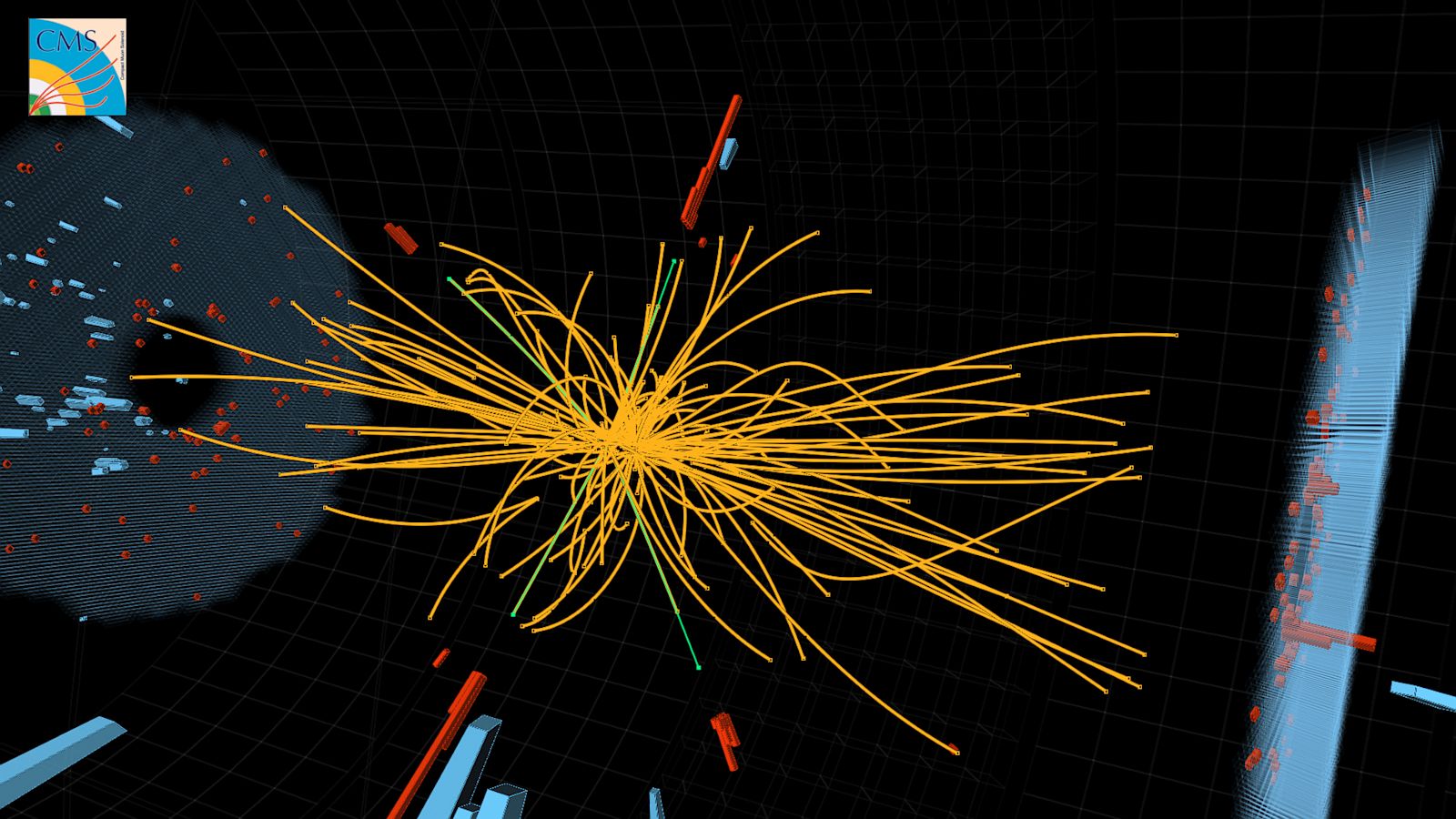
"In his best-selling book "A Brief History of Time", physicist Stephen Hawking claimed that when physicists find the theory he and his colleagues are looking for - a so-called "theory of everything" - then they will have seen into "the mind of God". Hawking is by no means the only scientist who has associated God with the laws of physics. Nobel laureate Leon Lederman, for example, has made a link between God and a subatomic particle known as the Higgs boson. Lederman has suggested that when physicists find this particle in their accelerators it will be like looking into the face of God. But what kind of God are these physicists talking about?"

"Theoretical physicist and Nobel laureate Steven Weinberg suggests that in fact this is not much of a God at all. Weinberg notes that traditionally the word "God" has meant "an interested personality". But that is not what Hawking and Lederman mean. Their "god", he says, is really just "an abstract principle of order and harmony", a set of mathematical equations. Weinberg questions then why they use the word "god" at all. He makes the rather profound point that "if language is to be of any use to us, then we ought to try and preserve the meaning of words, and 'god' historically has not meant the laws of nature." The question of just what is "God" has taxed theologians for thousands of years; what Weinberg reminds us is to be wary of glib definitions."

This pertians to the abstract metaphyiscal position of God in relation to human thought. But we must also understand God's nature. There are two concepts that spell out God's position in relation to humanity and to the universe as a whole:


(a) The Object of Utlimate Concern (OUC)

Not all religions deal with "God." God, as conventionally concieved God is not necessary to religions such as Buddhism. But all religons do deal with "the objecti of ultiamte concern" or that which concerns us ultimately. This is a concept by theologian Paul Tillich. It's not pinned down to any one thing in particular because it can be concieved of in many ways. But Tillich identifies it as "being itself." The object of ultiamte concern is synominous with God, this God is actually brought through the back down of all religions.

Object of Ultimate Concern:

This term is used from the persepective of our existential experience in being. What is being said is that God is the ojbect toward which we orient our final interests or our sense of meaning in life, our understanding of what is important, what life is about. This is no more contradictory to the other terms than calling God "the ojbect of worship."


In my view the OUC is essentially another way of Talking about God, although not necessarily the conventional notion of a "big man" on a throne. In my view whatever is ultimate, and whatever deterines our final destiny is clealry the OUC. So we have left with a sense of some overarching concept which guides and shapes our thinking, and this is related to primdordial being at the most basic level. So we are stuck with God in one form other anther weather we like it or not.


(b)Being itself:


This is the basic concept of God in Tillich's world view.What is being said is that God is the basic condition underwhich anything can be. God is synonimous with the very natuare of being because being proceeds from God and is contingent upon God. In this sesne God is thought of as synonimous with the very nature of Being, since God is the primary example of what it is to be (since nothing else would ever come to be or even have potential to be without God's express desire that it exist).There can only be one of these. By defition there can only be one thing that is the basic experssion of what it is to be and upon which all else (i mean everything, every single thing) is predicated. It woudl be a contradiction in terms to speak of two of them.Ground of Being us basically the same term. Sometimes Tillich used one, sometimes the other. It means the same thing, but at times Tillich thought that the focuss should be upon the platform upon which the being of beings rested, that is the basis of the being that we have as beings. But they are talking about the same thing.Naturally there can only be one of these too since its the same thing.for more on God as Being Itself (ground of Being)


Is God a "personal Being?"

For most people, consciousness is thought to be a side effect of brain chemestry, and being a person is an outgrowth of that side effect. But there is a school of thought that says that consciousness is a basic property of nature, it starts at a very reudamentary level and works its way up to the highest, thus conscousness is diffussed through the entire unvierse. I believe something similar to this, but for me Consciousness is the basic framework of reality. In this sense then I am saying that God is conscoius. But I'm saying more than that too.

I agree with Bishop George Berkeley, a philosoher who lived in the 18th century. He beileved that to be is to be percieved, and that God is percieving reality and holding it together in the divine perception. I believe that too, God is like the mind that thinks the universe, the universe is the thought in the mind of God. That doesnt' make our existence unreal or illusory, I dont' believe it is illusory. For us, who are part of the thought, our existence is very real, but it is in a higher framework which creates the reality we know as a matter of thought. That is part of God's basis as "being itself." Our being is litterally proceeding from God as thoughts from a mind.

This answers a lot of questions, mainly dealing with time and the creation of the universe, but it also stipulates that God is consciousness. There are several consequences that flow out of this discovery:


(a) God is Consciousness

God is not "a personal being" because, as the information on Being itself indicates, God is not "a being" no one of many like himself but is totally unique, and beyond the level of an indiviual contingent thing. God is not "a being" becasue this implies that he one unique example of a kind, and thus a contgingency. But God is not contingent but logically and ontologcially necessary. Thus God is not "a being." yet God is conscious.


(b) God is The personal Itself.

Consciousness, "the personal" is not just an idivudal trick of brian chemestry taht affects contingent beings one at a time, but is a quality of existence, an outcome and aspect of Being which is intrinsic to all rality, it is the framework in which that that we know as "reality" is generated and held in place. In that sense God is "the personal itself."


see a very extensive file on Berkeley


Mystical Theology

We can draw conclusions in these matters of God's nature and that of the universe, and the relation between the two, through logic and other means. But we cannot turely know the reality of God other than or apart form mystical expereince. That is to say, we experience God as the deepest level beyond words, thougths, or images. This is because God transcends our understanding. We cannot say what God is, we can only make the most rudementary guesses, which is all this stuff is. We cannot trley know, but we can experince. We do experince God this way; mystical experince is at the heart of all organized religion.


Mystical Theology and Religious Traditiions

We seek to talk about our experinces because we are social creatures. We have to talk about our experinces of God, even though they are not in words and we even understand them oursevles. Thus we must encode them into langauge and for that we must maks these deeply contradictory feelings with cultural symbols from our symbolic universe. Thus all religious traditions are different, because they all inovle their own cltures and are made out of their own cultural constructs; yet they all represent the same reality which stands behind them all. The detials just dont' matter. One faith calls its' God "Woden" and thinks he wants virgin sacrafice hung on a tree. Another faith calls its God "Demiter" and thinks this God a she and that she wants a sacrafice of Grain from every harvest. None of this matters. the gender doesn't matter, the sacrafice doesnt' matter, not the names, not the countries, all are just meaingless deatils constructed out of the constructs of each naion, the symbols that are meaningful to each group. But they all represent one true reality standing behind them all. Like a prisim they break down the true white light into colored details and each one fixates upon each detail; one is a "red" tradition, red is the truth. Anther is a "blue" tradition, only blue is true, but in reality, they are all just reflections of one reality which only makes real sense when it's all together and shining naturally upon the eye.

This is what I mean by the slogan I use a lot, "all gods point to 'God.'" One cannot paly the verious relgious traditions off against each other. The atheist who constratly harps "how do you know which God is true" doesn't know what he's asking. Because none of them are, and all of them are, because they all reflect the same reaality behind all religous traditions, but a reality we can only understand in metaphor.


Revelation: Jesus Christ

I beleive that God does give us special revelation. But that revelation is Jesus Christ, not the Bible. The Bible is a record of divine human incounters. It contains the word of God, but is not the word of God itself. The Bible is a collection of writtings which were produced out of personal encounters with God and reflects many differnt levels of inspiration; Jesus is the perfect revelation of God to humanity. I've written on nature of Biblical Revelation..

I accept the Nicene creed. I beileve that God entered history as a human to express solidarity with us. One can be present in one's own fantasy, or in one's own thoughts. God projects himself into the thought of the universe and becomes part of it as a man. See my Essay "How Do I know That Jesus is The Son of God?"


The Atonement

My views on the Atonement are a bit unconventional. Whiles see it as symbpathetic magic, as finanacial transaction and so forth, I see it as a statement of solidarity. I don't accept the propitation model: Jesus didnt' turn away God's wrath, or take warth upon himself. That's one aspect of expressing it, but its' not the complete picture. The punishment upon Christ doesn't magical pay a debt that we couldn't pay. But in identifying with us and with our ends and with the curse of sin, social and personal, and the consquences of that in death, Christ expresses God's solidarity with humanity; solidarity in political sense means one is willing to identify with the oppressed so closely as to shar their fate. Christ shares our fate to illustrate in a power and beautiful way that God is on our side.

It is out of this solidarity that the ground is created for forgiveness of sin. We cannot be in solidaritry with God and sin. when we place ourselves into the symbol of Chrit death and accept solidarity with God we turn form a lif of sin and thus the gound is created upon which our sins are forgiven. For more, see my essay.


Other Faiths

I don't see other faiths as a problem. God is working in all cultures. Other faiths are just different cultulrally constructed means of expressing the same relaity that is behind all religion. Jesus is the direct revelation, the example which teachs us God's ture character.But that doesn't condmen other faiths. See my essay on the topic.Salvation and Other Faiths


Hell and Afterlife

Religion is not some means of social control. Humanity has been religious for 50,000 years or more, probalby longer than we have been Homo sapiens. We had religious feelings since before we had the level of social orgnaization for control. Religion is not about scaring people with punishment in after life. Relgious belief is about coming to understand the probelm at the heart of being human; its' about ajusting to life and to death. Its' abotu personal fulfillment and finding meaning which explains life at an existential level and makes living worthwhile. I dont' believe in a hell fire and brimstone after life. There are those who ask "well why should I believe if I don't have to worry about punishment?" I think that's so immature. The point not to get out of punishment but to find the meaning and fulfillment of knowing God. The mystical experince is about the greatest thing in life. Its' a palpable feeling which changes and transforms peopel in dramatic ways. It's worth everything to experince it.

I believe that when one dies seperated from God in rebellion against the good, one is seperated forever,but not in a realm of fire and brimestone, but probalby just ceasing to exist. I believe there is an eternal life with God for those who have always sought to find God, and I see that a mystical relaityin whcih our conscousnesses unite with the divine conscoiusness, but we will also understand our own plights and experinces as individuals; an intimate and mystical union

To me that's what everything is about and it's worth any sacrafice to discover.


Trinity

The Christian faith embraces God as Triune. Since I affirm the Nciene Creed, I also affirm the Trinity. The concept of Triune God is essential to the notion of God as being itself. The Godhead is the priamry and primordial differentiation of being; without that, being would be hardly distinguishable from nothingness; thought and purpose can't come in a vauum, a community is requires where consciousness is concerned. The Trinune God is the ultimate community, a multiplicy of consciousness, yet united in a onesness through shared essence.


Ethics


What is the purpose of it all? Why did God create? My view Christian ethics is too elaborate to present here, I will write an essay soon laying out my ehtical theory. But suffice to say that I see a basis for all creation and for the impitus of God's purpose in the primary motivation out of God's character, which is love. Love and being share a very basic attribtue, but are poastive affirmations that bestriw things upon the other; being seeks to bestory being upon beings, and love seeks to bestow "the good" upon the other. Thus love is the basic character of God, who is "being itself" and that forms the primary motivation for all ethical atction.


Theodocy

I will close the overview with a look at theodocy. Why does God allow pain and evil? The answer to this question is central to my whole theology. My theory is called Soeteriological Darama

It's about how God created for the purpose of having corperoeal moral agnets who willingly choose the good. This requires that we struggle through faith and doubt as part of a great darama. We must seek salvation in spite of these probelms, but God promises that if we seek we will find. I hope my website will help some do just that.